Mike Oldfield – Tubular Bells (1973)
Updated: 2 days ago
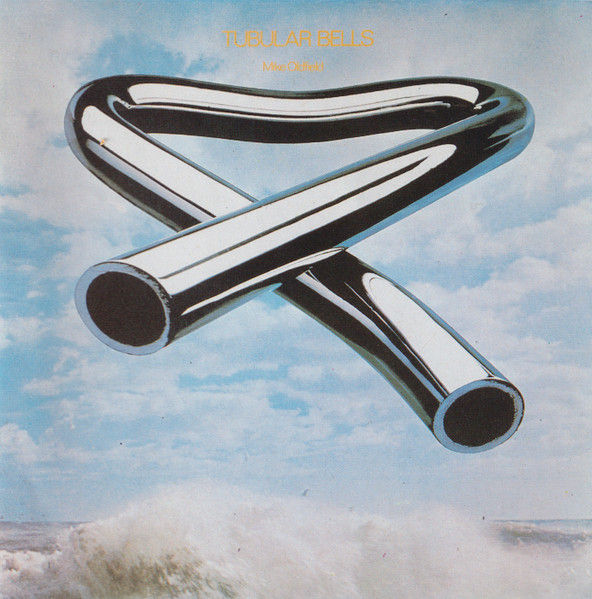
Welcome to review number 750. This means there's only about 500 more to go, as long as I don't buy any more CDs.
So, we're probably about halfway through, given that it's about six weeks since I pulled something off the shelves, rather than address the backlog of purchases.
I felt that the 750 landmark ought to be a special, but this is genuinely the next one on the pile of recent purchases.
While this was an ever present through my teenage years, I'm pretty sure this is the first time I've actually owned a copy of the album, thanks to a 99p price tag in Oxfam. Someone recorded it for me in the mid 1970s on one side of a C90 (the relevance of that will be explained), so I know it very well indeed from 50 years ago.
The album was the first release on Richard Branson's Virgin Records, and many have suggested that the success of the album led to much of the profits being funnelled into providing recording facilities for less well known Virgin acts of the time - so perhaps giving exposure to the likes of Henry Cow, Gong, Hatfield and The North, as well as introducing Faust and Tangerine Dream to a British audience. All this certainly established Virgin as a leftfield, even hippy record label.
It was certainly unheard of in 1960s and 1970s pop for the album charts to be topped by a (largely) instrumental album, consisting of one track on each side - Soft Machine's Third was the closest parallel, but that only just popped its head into the top twenty - certainly by an unknown artist. Oldfield's previous brush with stardom had been as bassist/guitarist in Kevin Ayers' backing group, The Whole World.
The album was released to some critical acclaim, but the breakthrough seemed to happen thanks to John Peel championing the release, and playing the whole of the first side on his radio show, and the use of the opening piano theme in The Exorcist.
Has it stood the test of time or was it propelled purely by novelty? Part one opens with the aforementioned Exorcist piano piece, before some interesting guitar work in the middle section before the grand parade through the instruments, narrated by The Bonzos' Vivian Stanshall, leading up to closing with the eponymous Tubular Bells. It's by far the better known of the two parts, containing the most recognisable themes. Part two, by contrast feels a little more forced and less coherent. It has a pleasant acoustic guitar opening, followed by a very mellow mandolin piece. The pastoral feel is smashed by the grunting of 'Piltdown Man', leading to a seemingly endless section of guitar noodling, almost trademark Oldfield. And for years, I thought the album ended on a fade of this guitar noodling, not realising that whoever taped it for me had ended it then, 45 minutes into the 49 minutes of the album. So it was a number of years before I heard the Sailors' Hornpipe which concludes the piece, and it still sounds incongruous today.
The unusual success of this album can't be overstated, and while Oldfield followed this with two similar successful albums in Hergest Ridge and Ommadawn, it's debatable whether anything else he did in his career has similar impact. Certainly attempts to recreate it, in Tubular Bells 2, 3 and The Orchestral Tubular Bells have felt trite and contrived.
If truth be told, it's over long and the second side in particular has too much forced into it - but it's an important album even if only because it allowed Virgin to be much more experimental with future releases than it might otherwise have been.
4* - certainly part one still sounds great and the 1970s pop historical place of this album is clear


Comments